What Is Couscous? Morocco's Most Celebrated Family Meal
Couscous is steamed semolina served with slow-cooked vegetables, meat or fish and a fragrant broth — Morocco's most cherished family meal, shared every Friday.
Recipe reviewed by P'Jae · Editorial review by Bruno Potier
Couscous is one of Morocco's most iconic dishes — steamed semolina grains served with slow-cooked vegetables, meat or poultry, and a fragrant broth. But more than a meal, couscous is a symbol of family, generosity and hospitality, bringing people together around the same table every Friday and at life's most important celebrations.
What Is Couscous?
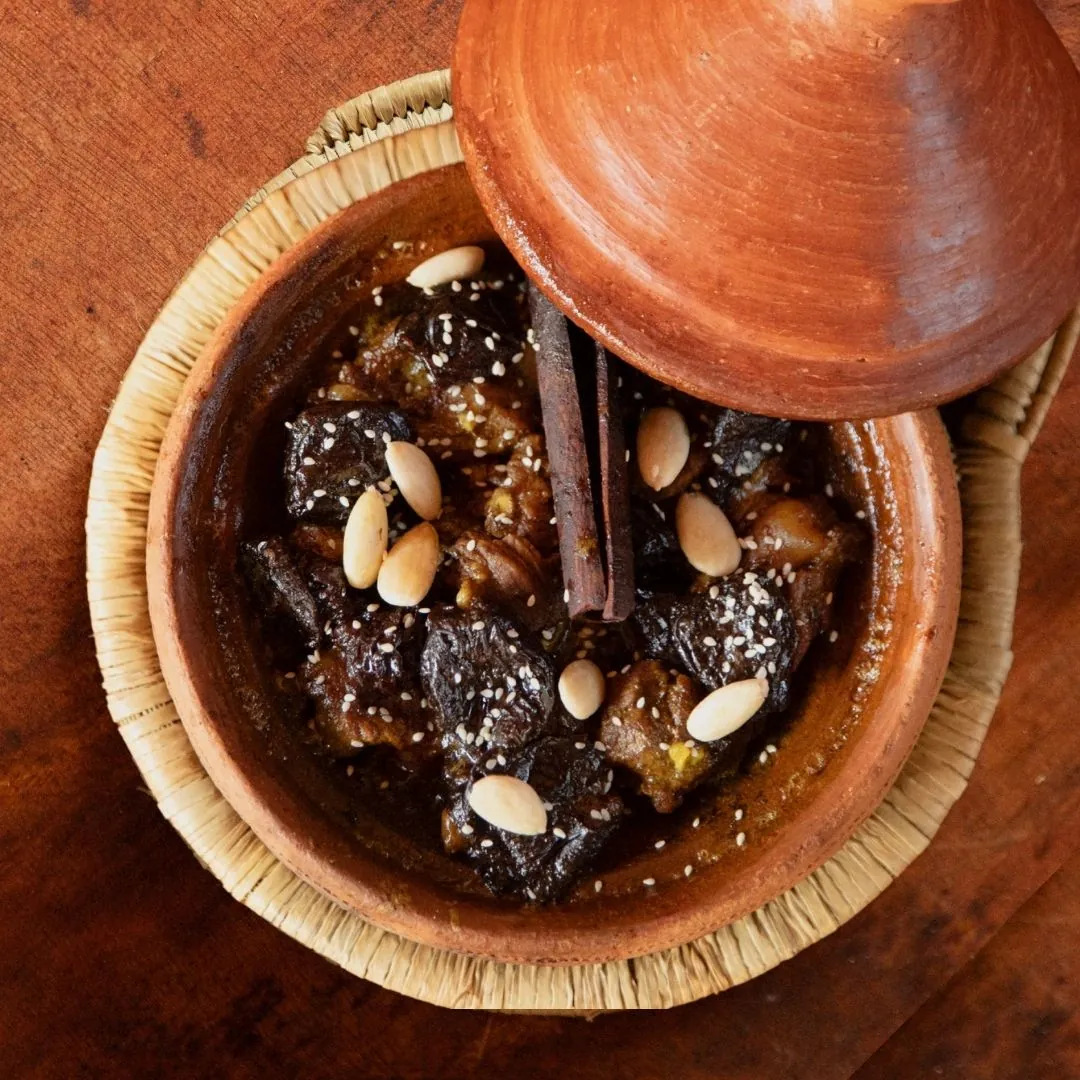
Ask anyone to name Morocco's most famous dish and many will immediately think of the tajine. Ask a Moroccan, however, which meal best represents family life, and there's a good chance the answer will be couscous.
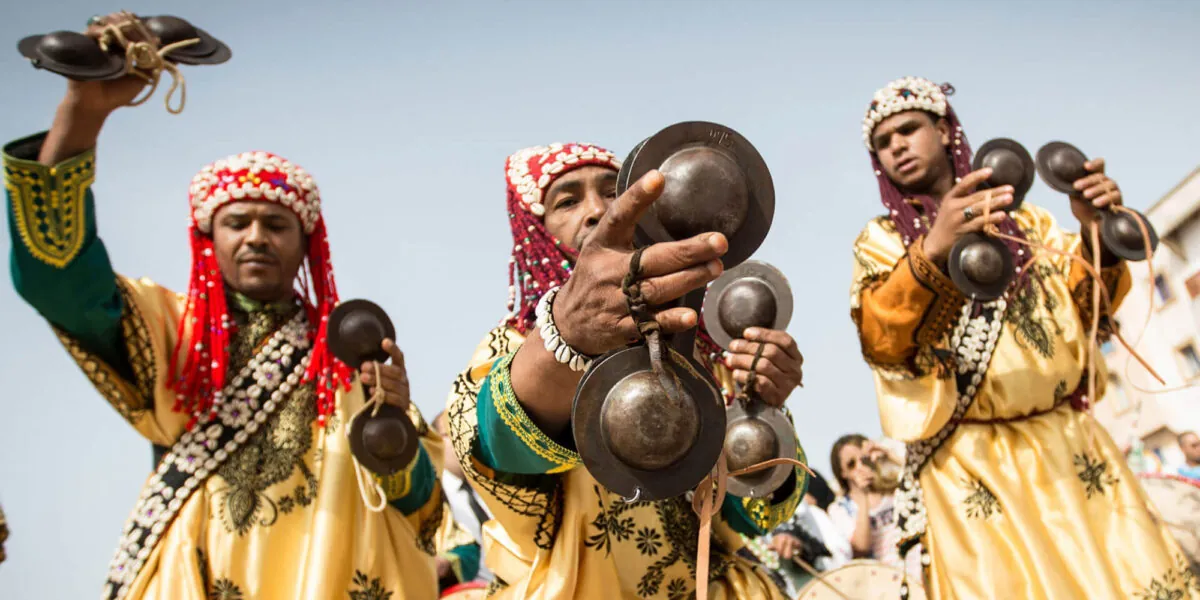
For centuries, couscous has been at the heart of Moroccan homes. It marks the rhythm of the week, brings generations together around one table and accompanies both joyful celebrations and quieter family gatherings. At the biggest of those celebrations, the table is often joined by music and ceremony — including the spiritual, trance-like sound of Gnaoua.
Its origins date back many centuries to the Amazigh (Berber) peoples of North Africa, who developed the techniques of preparing and steaming semolina long before couscous became known around the world — one of the founding traditions we trace in our complete guide to Moroccan cuisine. Over time, every region of Morocco adopted the dish, enriching it with its own traditions, ingredients and family recipes.
In Morocco, couscous is never simply a side dish. It is the meal itself — and, perhaps more importantly, a moment of sharing.
How Is Traditional Moroccan Couscous Prepared?
Preparing authentic Moroccan couscous is a slow, highly skilled process that has been passed down through generations.
Contrary to what many people believe, traditional Moroccan couscous is never simply covered with boiling water. Instead, the semolina is prepared entirely by hand and steamed four separate times in a traditional two-part pot called a couscoussier.
Before the first steaming, the grains are lightly moistened with salted water and gently rubbed by hand with a little olive oil to separate every grain. This first step is essential to achieving the light, airy texture that defines authentic Moroccan couscous.
After each steaming, the couscous is tipped into a large dish, carefully broken apart by hand, sprinkled again with a little salted water and gently worked before returning to the steam. This patient process is repeated four times, gradually transforming the semolina into perfectly fluffy grains that remain beautifully separate.
After the final steaming, many families gently fold in a little butter or smen — Morocco's traditional fermented butter — which gives the couscous its characteristic richness and subtle depth.
Meanwhile, a fragrant broth slowly cooks in the lower part of the couscoussier. Depending on the region and the family recipe, it may include lamb, beef or chicken together with seasonal vegetables such as carrots, courgettes, pumpkin, turnips, cabbage and chickpeas. Saffron, ginger, turmeric, black pepper and fresh herbs perfume the broth without overpowering the natural flavour of the ingredients.
Once everything is ready, the couscous is arranged on a large communal platter. The vegetables and meat are carefully placed on top before the broth is served alongside — or gently spooned over the dish, according to each family's tradition.
Preparing couscous isn't simply cooking. It is a ritual of patience, craftsmanship and generosity, handed from one generation to the next for centuries.
Why Is Couscous Traditionally Eaten on Fridays?
In Morocco, Friday and couscous have become almost inseparable.
After the Friday prayer, families return home to gather around one large communal platter. Grandparents, parents, children and guests all share the same meal, each eating respectfully from the section in front of them.
This weekly tradition is about far more than food. It celebrates family, gratitude and hospitality. Even today, countless Moroccan households continue preparing couscous every Friday, preserving a ritual that has remained remarkably unchanged through generations.
For many Moroccans living abroad, Friday couscous remains one of the strongest connections to home.
More Than a Meal
Couscous accompanies many of life's most meaningful moments. It is served at weddings, births, religious celebrations, family reunions and important gatherings where welcoming guests is central to the occasion.
Offering couscous is often considered a gesture of generosity and respect. The larger the platter, the warmer the welcome.
This spirit of sharing explains why couscous holds such a unique place in Moroccan culture. It is not prepared to impress, but to bring people together.
The Different Types of Moroccan Couscous
There is no single authentic Moroccan couscous. Every family has its own way of preparing it, shaped by regional traditions, seasonal ingredients and recipes passed down through generations.
Some of the best-known Moroccan varieties include:
Friday Couscous
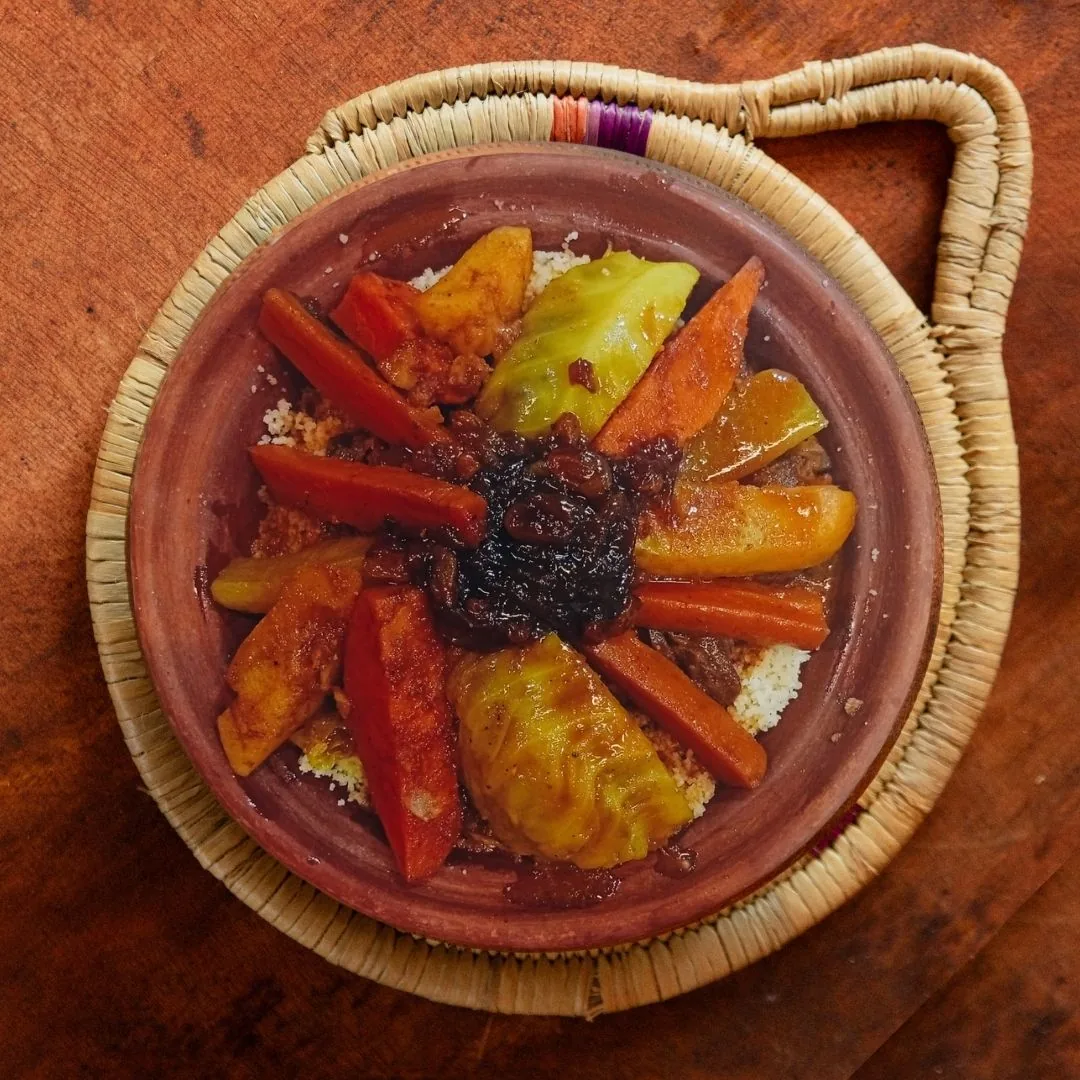
Perhaps the most iconic version, traditionally served after the Friday prayer. It is prepared with seasonal vegetables, chickpeas and tender lamb, beef or chicken in a fragrant broth. For many families, this is the couscous that defines home.
Tfaya Couscous
One of Morocco's most celebrated festive dishes, topped with tfaya — a slow-cooked mixture of caramelised onions, raisins, cinnamon and honey that creates the delicate sweet-and-savoury balance so characteristic of Moroccan cuisine. It is often served for weddings and special occasions.
Chicken Couscous
A lighter variation prepared with free-range chicken, seasonal vegetables and a delicately spiced broth. It is especially popular for family lunches.
Fish Couscous
Along Morocco's Atlantic coast, many families prepare couscous with fresh fish instead of meat. Local seafood, aromatic herbs and seasonal vegetables reflect the country's rich maritime heritage and offer a completely different expression of the dish.
Couscous with Lben
In some rural regions, particularly during the warmer months, couscous is served simply with chilled lben, a traditional fermented buttermilk. Modest yet deeply comforting, this version reflects the agricultural roots of Moroccan cuisine.
Across the Atlas Mountains and throughout Amazigh communities, countless local variations continue to preserve traditions handed down for centuries, each telling the story of its region through local ingredients and ancestral techniques.
Couscous Around the World
Today, couscous is enjoyed across Europe, North America, the Middle East and far beyond. As it travelled, the dish naturally evolved.
Instant couscous, which only requires hot water, became popular for its convenience. While practical, it bears little resemblance to the traditional Moroccan method, where the semolina is patiently steamed four times to develop its distinctive texture.
Recipes vary enormously from one country to another. In Morocco, however, couscous remains closely tied to family traditions, seasonal produce and the slow rituals of home cooking. It is this heritage — not simply the ingredients — that makes Moroccan couscous unique.
Discovering Couscous at Dar Mansour
At Dar Mansour, couscous is prepared with the same respect for Moroccan tradition that has guided family kitchens for generations. Our semolina is patiently steamed using traditional methods before being served with fragrant vegetables, carefully prepared broth and authentic family recipes inspired by the regional traditions Maïja learned during more than thirty years living in Morocco.
Every Friday, we continue one of Morocco's oldest customs by serving traditional Friday Couscous — inviting guests to experience not only one of the country's most iconic dishes, but also the spirit of sharing, generosity and hospitality that surrounds it.
Frequently asked questions
Is couscous originally Moroccan?
Couscous has Amazigh (Berber) origins and has been prepared across North Africa for centuries. Today it is considered one of Morocco's most important national dishes and an essential part of its culinary heritage.
Is couscous a grain?
Not exactly. Couscous is made from semolina, which comes from durum wheat. The grains are rolled, moistened and traditionally steamed several times rather than boiled.
Why is Moroccan couscous different?
Authentic Moroccan couscous is steamed four times in a couscoussier, with the semolina carefully worked by hand between each steaming. This traditional technique creates the light, fluffy texture that instant couscous cannot achieve.
Why do Moroccans eat couscous on Fridays?
Friday is traditionally a day of prayer, family gatherings and hospitality. Sharing couscous after the Friday prayer has become one of Morocco's oldest and most cherished weekly traditions.
What is the difference between couscous and a tajine?
A tajine is a slow-cooked dish prepared in a traditional clay pot, while couscous is steamed semolina served with vegetables, meat or fish and a fragrant broth. They are Morocco's two most iconic dishes, each prepared with entirely different techniques.
Taste the story around our table
The best chapters are written over a slow Moroccan dinner. Reserve your evening at Dar Mansour.