
How to Get Around Koh Phangan: Scooters, Taxis, Cars and Boats
How to get around Koh Phangan — scooter, taxi, car or longtail boat — and whether you actually need a scooter, with local 2026 prices and journey times.
Editorial review by Bruno Potier
A local guide to getting around the island — and deciding whether you need a scooter at all.
The short version: if you already ride confidently, a scooter gives you the most freedom. If you don't, don't learn on holiday — use taxis, or rent a car, which also makes sense for families, groups and some east-coast stays. A week in Koh Phangan without a scooter is entirely realistic, particularly in Sri Thanu or Haad Rin. And for a few beaches, the longtail boat is the transport, not the excursion.
Which Option Fits Your Trip?
Most guides answer this question with one word: scooter. That is the right answer for some visitors and a poor one for others.
Four things matter more:
- Whether you already ride. Not whether you'd like to. Learning to ride a scooter on unfamiliar roads during a holiday adds unnecessary risk.
- Where you're staying. A stay in Sri Thanu and a stay at Thong Nai Pan are two very different trips, with different transport needs.
- Who you're travelling with. Solo, as a couple, as a family or in a group.
- How much of the island you want to explore. Staying mostly within one area requires very different transport from crossing the island regularly.
There is no universal winner. For someone already comfortable on two wheels, a scooter is flexible and enjoyable. For someone who isn't, taxis or a car can make much more sense.
Your Options at a Glance
| Mode | Best for | Range / practical use | Main limitation |
|---|---|---|---|
| Scooter | Confident riders, solo travellers and couples | Flexible island-wide exploring | Requires genuine riding experience and the correct licence |
| Shared pickup taxi | Moving between areas without riding | Main routes and areas served by local drivers | Fare negotiated per person; some journeys may involve waiting |
| Private taxi | Evenings, arrivals and luggage | Point-to-point transport | Generally more expensive in the evening |
| Car | Families, groups, non-riders and some east-coast stays | Comfortable island-wide exploring | Parking can be harder than with a scooter |
| On foot | Short distances within one area | Particularly useful in walkable villages | Heat and distances between areas |
| Bicycle / e-bike | Shorter journeys, particularly on the flatter west coast | Most practical around Thong Sala–Hin Kong–Sri Thanu | Hills make many other routes harder |
| Longtail boat | Beaches and bays where boat access makes sense | Specific coastal connections | Weather- and demand-dependent |
Taxis and Shared Pickup Taxis
Koh Phangan's shared taxis are converted pickup trucks, known locally as songthaews. You'll see them on the main roads and can wave one down.
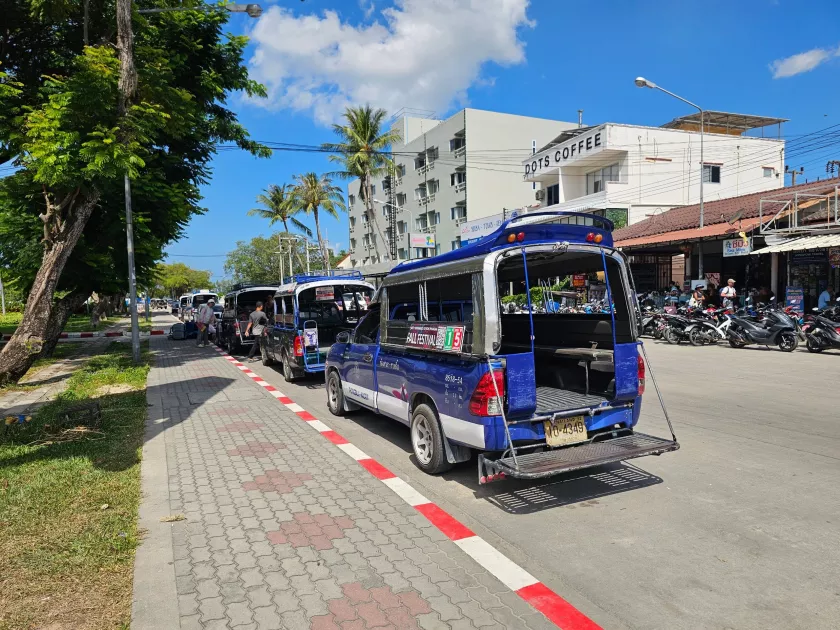
Drivers tend to work by area. Not every driver covers every part of the island, so the first taxi you stop may not be going where you need.
Fares are quoted per person and are negotiable. From our local experience in 2026, Thong Sala to Hin Kong costs around 250–350 THB per person, depending partly on the time of day. Treat that as a useful indication rather than a fixed island tariff.
Ask the price, negotiate if necessary, and agree it before travelling.
You may be asked to pay as you board. This is something we encounter locally, particularly when the passenger doesn't already know the driver.
Evening journeys generally cost more, and longer trips can involve some waiting. A driver may wait for additional passengers before leaving, particularly on longer routes.
You also don't have to rely entirely on finding a taxi on the road. Drivers can be called directly, and restaurants and accommodation can sometimes help arrange one. At Dar Mansour, for example, we can call a driver to collect guests at the end of the evening.
As of September 2026, ride-hailing apps such as Grab and Bolt were not operating on Koh Phangan, so don't rely on them as your transport plan.
Renting a Scooter
If you already ride confidently, a scooter gives you the greatest freedom to explore Koh Phangan independently.
What It Costs and How Long You Can Rent
From our 2026 experience, a standard 125cc scooter, such as a Honda Click or similar, costs around 250 THB per day in low season and approximately 300–350 THB per day in high season.
For longer rentals in low season, rates can fall to around 200 THB per day, or approximately 6,000 THB for 30 days.
Rental periods change with demand too. In low season, renting for a single day is generally possible. During busy high-season periods, around three days minimum is common, while some rental shops may require a full week.
These are approximate prices and practices from our experience on the island, not fixed rates followed by every rental shop.
Deposit, Documents and Helmet
Rental shops commonly ask to keep your passport as security. From our experience, a cash deposit of around 5,000 THB is also often offered as an alternative.
We prefer the cash option. Your passport is an important travel document and it is more useful to keep it with you during your stay.
Helmets are generally supplied with rental scooters. Thai law requires motorcycle riders and passengers to wear one.
Before leaving the rental shop, photograph or film the scooter's existing condition and keep the files until you return it.
It is also worth asking what happens if the scooter breaks down. We have personally had a rental scooter fail and the rental company came to deal with it. That doesn't mean every company offers the same service, so asking about assistance or recovery before renting is worthwhile.
Licence and Insurance
A rental shop being willing to give you a scooter does not necessarily mean you are legally entitled or insured to ride it.
Travellers need to make sure that their own driving licence, together with any International Driving Permit required for their circumstances, legally covers the motorcycle or scooter they intend to ride in Thailand.
A licence or permit that covers cars only does not cover a scooter simply because it has a small engine, and an International Driving Permit does not add a motorcycle category you don't already hold.
Requirements can vary according to the country that issued your licence, so check the rules that apply to your own documents before travelling.
Insurance is separate again. Coverage can depend on whether you hold the licence required for the vehicle and comply with the conditions of your policy. Check your travel insurance before riding, and ask the rental shop what its own agreement and cover actually include rather than assuming.
When Not to Ride
If you've never ridden before, Koh Phangan is not the place we'd choose to learn.
The island has easy stretches, but it also has roads where previous riding experience matters.
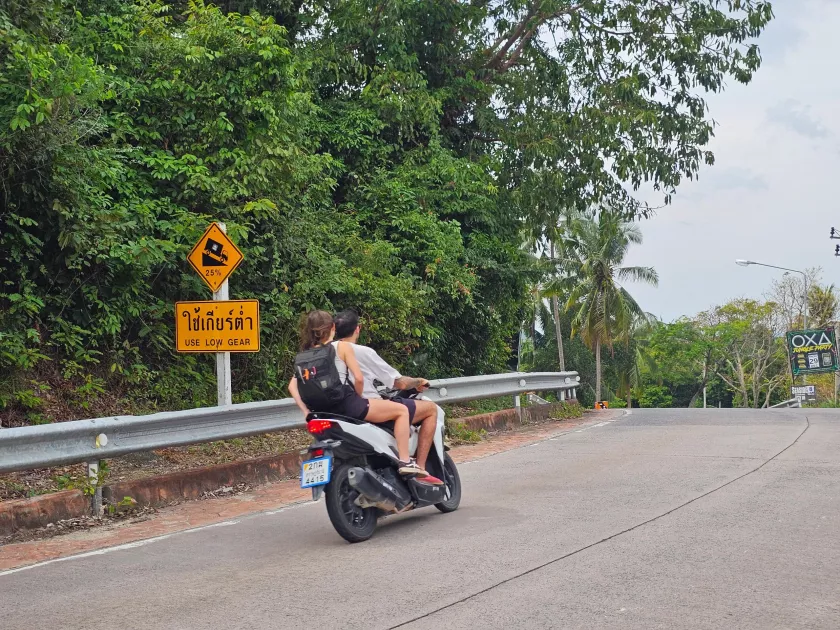
Roads towards Haad Rin involve noticeably more climbing, descending and bends than the flatter west-coast roads. Routes towards the east of the island can also involve significant elevation changes.
By contrast, the Thong Sala–Hin Kong stretch is relatively flat and easier.
Road surface matters too. Sand can accumulate on the road, particularly after heavy rain, and debris can be washed onto the surface. Slow down before bends and anticipate changes in the road rather than braking or changing direction suddenly once you're already on them.
Renting a Car
A car isn't simply a fallback for people who don't want a scooter.
It makes particular sense for families, groups, visitors who don't already know how to ride, and people planning to explore several parts of the island.
It can also be particularly useful if you're staying on the east coast around Thong Nai Pan. From there, reaching the north-west takes approximately 45–60 minutes, so having your own vehicle can make a substantial difference to how easily you explore.
For a solo traveller who is already an experienced rider, a scooter may feel more practical and enjoyable. For a family or group, the calculation can be completely different.
The main practical disadvantage of a car is parking. Some restaurants, beaches and other places have limited space, while finding somewhere to leave a scooter is generally much easier.
Getting Around Without a Scooter
Yes, you can spend a week in Koh Phangan without renting a scooter.
Where you stay becomes much more important.
For a trip where you want to do plenty on foot, Sri Thanu and Haad Rin are two of the areas we'd particularly consider. Both put restaurants, services and activities within walking distance, reducing how often you need transport.
You can then use taxis for journeys farther afield.
Walking works best for short distances within the same area. The heat is one of the main practical limitations — what looks like a manageable distance on a map can feel very different in the middle of the day.
Koh Phangan is therefore better thought of as an island with some walkable areas, rather than a generally walkable island.
Bicycles and E-Bikes
Cycling exists in Koh Phangan, but it isn't one of the island's main ways of getting around.
A conventional bicycle makes most sense on the relatively flat Thong Sala–Hin Kong–Sri Thanu corridor. Once you move into hillier parts of the island, the climbs and descents make it considerably less practical.
Electric bikes are also available to rent.
For most visitors, cycling is best considered for particular routes and areas rather than as an island-wide replacement for a scooter, car or taxi.
Longtail Boats
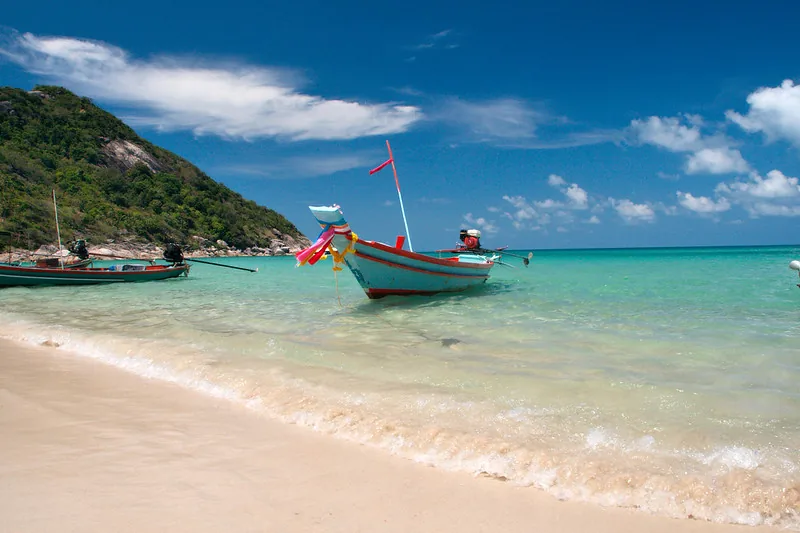
Longtail boats aren't only for sightseeing. In some parts of Koh Phangan, they're a genuine way of getting from one place to another.
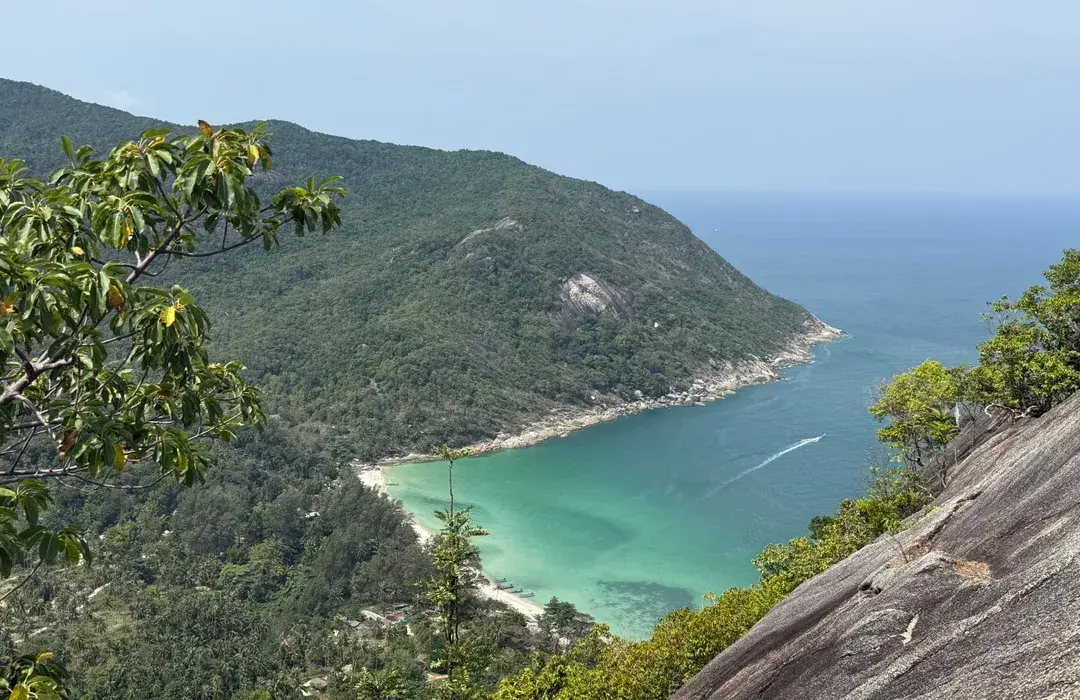
Bottle Beach is one example where arriving by boat can make sense.
On the south-east coast, Haad Yuan is another. Longtails run from the Sunrise Beach side of Haad Rin, with the crossing taking around 10–15 minutes in suitable conditions.
And this isn't only daytime transport.
Longtails also operate at night, including between Haad Rin and Haad Yuan. Eden Garden, at Haad Yuan, is one example of a night out where the boat can become part of the journey itself.
The important thing is not to think of a longtail like a scheduled ferry.
They operate on demand rather than to a fixed timetable. A boat may leave once enough passengers have gathered, while sea conditions, time of day and demand can affect whether boats are running.
Prices are agreed on the day, so ask before boarding rather than relying on an old fare found online.
And beyond the practical side, travelling along the coast by longtail is one of those journeys where the transport becomes part of the Koh Phangan experience itself.
Arriving at Thong Sala Pier
If you arrive at Thong Sala Pier without your own transport arranged, getting to your accommodation is normally straightforward.
Hotels and villas can often organise a pier pickup in advance. Otherwise, there are generally plenty of taxis around the pier when ferries arrive.
There are also numerous scooter and car rental businesses around Thong Sala, so renting shortly after arrival is possible.
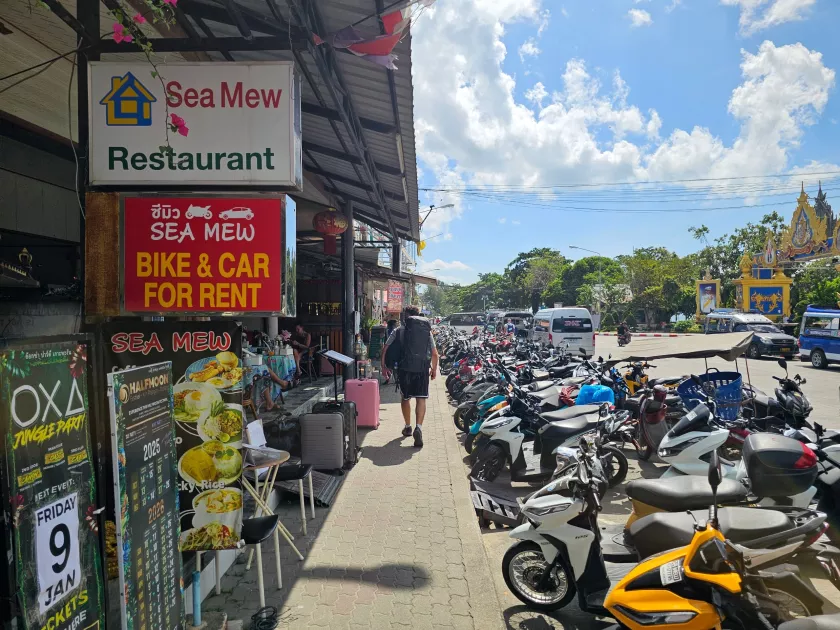
Season makes a difference. In low season, finding a vehicle after arriving is generally straightforward. During high season, availability can become tighter, so if you already know you want a particular vehicle, we'd book ahead rather than assume one will be waiting.
If you're arriving with large suitcases, take a taxi to your accommodation first and arrange your scooter afterwards.
Carrying a large suitcase on a scooter requires considerable experience and isn't something we'd recommend to a visitor.
Roads and Journey Times Around the Island
Koh Phangan may look small on a map, but where you stay has a real effect on how much time you'll spend getting around.
In normal conditions, journey times by scooter and car are often fairly similar on the routes we use. Speeds are moderate, and normal traffic does not usually create a major difference between the two.
These are the approximate journey times we use in everyday life:
| Route | Allow |
|---|---|
| Thong Sala → Hin Kong | around 15 minutes |
| Hin Kong → Chaloklum | around 20–25 minutes |
| Hin Kong → Haad Rin | around 45 minutes |
| Thong Nai Pan → north-west | around 45–60 minutes |
These are practical estimates in normal conditions, not guaranteed driving times.
Getting to Hin Kong and Sri Thanu
The Thong Sala–Hin Kong–Sri Thanu corridor is relatively flat compared with the hillier routes towards Haad Rin and the east.
Hin Kong and Sri Thanu are also close enough together that this part of the west coast works particularly well for visitors who don't want to use a vehicle for every outing.
Our guides to where to eat in Hin Kong and where to eat in Sri Thanu explore both areas in more detail.
Getting to Thong Sala
Thong Sala is a major arrival point on Koh Phangan and an important practical centre for the pier, markets, banks and vehicle rentals.
From Hin Kong, allow around 15 minutes in normal conditions.
See our guide to where to eat in Thong Sala if you're spending time there.
Getting to the North
From Hin Kong to Chaloklum, allow approximately 20–25 minutes.
The north also opens up another way of moving around the island: some beaches, including Bottle Beach, can be reached by longtail.
Getting to Haad Rin and the East
From Hin Kong to Haad Rin, allow around 45 minutes in normal conditions.
Compared with the flatter west-coast roads, this is a noticeably more demanding ride, with more climbing, descending and bends.
Routes towards the east can also be hilly.
If you're not already confident on a scooter, a taxi or car lets you explore these areas without having to learn on unfamiliar roads.
Travelling at Night
Travelling around Koh Phangan after dark is part of everyday island life, but there are a couple of things worth anticipating.
Dogs are one of them. Groups of dogs may sometimes chase passing scooters, so stay alert and avoid sudden reactions.
The other is other road users. Later in the evening, particularly around nightlife areas, some people may have been drinking or may simply be paying less attention to the road.
The useful approach is not to be afraid of riding at night, but to leave yourself enough time and space to react to somebody else's mistake.
Getting Around in the Rainy Season
Heavy rain can change road conditions quickly.
We've experienced flooding substantial enough to affect access, and heavy rain can also leave sand and debris on the road surface.
When it's raining very heavily, our advice is simple: wait rather than head out on a scooter if you don't need to.
Once the rain has eased, don't assume the road has immediately returned to normal. Pay particular attention around bends and anywhere water has crossed the road.
Practical Tips
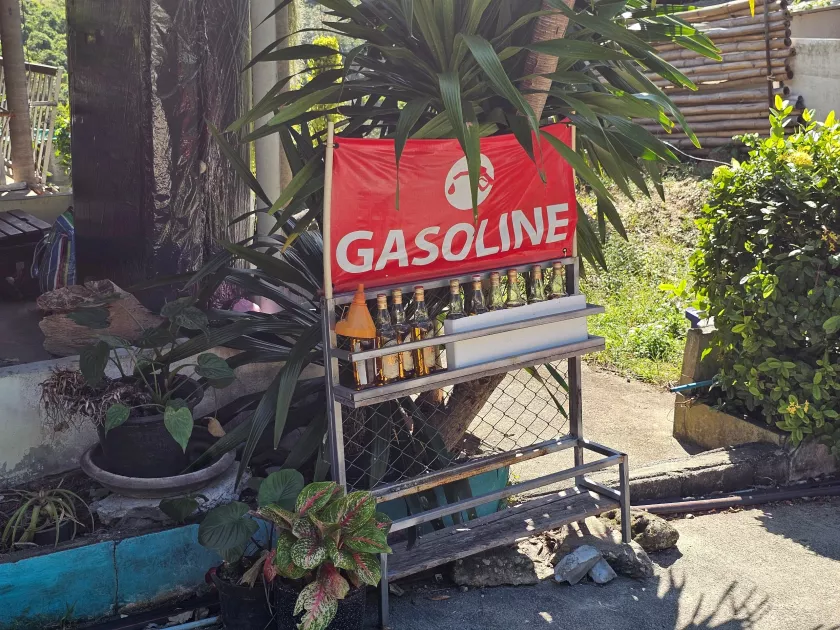
Petrol is easy to find. Alongside petrol stations and small local pumps, you'll see Thai shops selling petrol in reused glass bottles, often old spirits bottles — a familiar sight around the island.
Scooters are much easier to park than cars. If a restaurant, beach or accommodation has an access road that feels uncomfortably steep, there's nothing wrong with parking somewhere more comfortable and walking the final stretch.
Carry small notes when using taxis, and agree the fare before travelling.
Photograph your scooter before leaving the rental shop and keep the photos until you've returned it.
Final Thoughts
The best way to get around Koh Phangan depends less on what everyone else is doing and more on how you actually want to spend your trip.
If you already ride confidently and want to explore widely, a scooter gives you excellent freedom.
If you don't ride, you aren't stuck. A car works particularly well for families, groups and longer journeys. Taxis cover point-to-point travel. Choosing a base such as Sri Thanu or Haad Rin can make a scooter-free stay entirely realistic.
And sometimes the road isn't even the answer: for places such as Haad Yuan or Bottle Beach, a longtail can be part of how you experience the island.
That is why where you stay and how you plan to move around are really the same decision.
Once you've chosen your base, our guides to where to stay in Koh Phangan and the best things to do in Koh Phangan can help you plan how much of the island you actually want to explore.
Frequently asked questions
Do I need a scooter in Koh Phangan?
No. If you're already a confident rider, a scooter gives you excellent flexibility, but a week without one is entirely realistic. Sri Thanu and Haad Rin are particularly practical areas for a scooter-free stay, with taxis covering longer journeys.
How much does a scooter cost to rent in Koh Phangan?
From our 2026 experience, a standard 125cc scooter costs around 250 THB per day in low season and approximately 300–350 THB per day in high season. Longer low-season rentals can fall to roughly 200 THB per day, or around 6,000 THB for 30 days. These are approximate local figures, not fixed island-wide rates.
Do I need an international licence to ride a scooter in Thailand?
Your driving licence must legally cover the motorcycle or scooter you intend to ride, together with any International Driving Permit required for your circumstances. A car-only licence does not cover a scooter simply because it has a small engine, and an IDP does not add a motorcycle category you don't already hold. Requirements vary according to the country that issued your licence, so check before travelling.
How do shared taxis work in Koh Phangan?
Shared pickup taxis can be hailed from the road. Ask the price and agree it before travelling; fares are generally negotiated per person. Drivers tend to work by area, and longer evening journeys may involve waiting for additional passengers.
How much is a taxi from Thong Sala to Hin Kong?
From our 2026 local experience, allow approximately 250–350 THB per person. This is a useful indication rather than a fixed tariff, and evening journeys generally cost more.
Can I use Grab or Bolt in Koh Phangan?
As of September 2026, Grab and Bolt were not operating on Koh Phangan, so don't rely on ride-hailing apps as your transport plan.
Are the roads in Koh Phangan difficult to ride?
It depends on the route. The west-coast roads around Thong Sala and Hin Kong are relatively flat, while the route towards Haad Rin and roads towards the east involve more climbing, descending and bends. Sand and debris after heavy rain can also change the road surface.
Can you get around Koh Phangan by longtail boat?
For certain routes, yes. Longtails are used to reach places including Haad Yuan and Bottle Beach and can also operate at night. They run on demand rather than to a fixed timetable, with availability depending on conditions and demand.
What changes in the rainy season?
Heavy rain can cause flooding that affects access and can leave sand or debris on the road. During very heavy rain, our practical advice is to wait rather than head out on a scooter unless you need to.
Taste the story around our table
The best chapters are written over a slow Moroccan dinner. Reserve your evening at Dar Mansour.